
Roça Água-Izé
Once the most important cacao plantation in the world, now a hauntingly beautiful, partially-restored heritage site on São Tomé’s east coast.
Once the most important cacao plantation in the world.
In the early 20th century, this sprawling estate on São Tomé’s east coast was the most important cacao plantation in the world, helping make the country the largest cocoa exporter on Earth at its peak. The architectural grandeur and ongoing community life within the historic buildings make Água-Izé one of São Tomé’s most thought-provoking heritage experiences, a working window into the complicated legacy of the plantation economy.
What is Roça Água-Izé?
Roça Água-Izé is one of the most historically significant, and visually striking, heritage sites in São Tomé and Príncipe.
Today Água-Izé is partially restored and partially in evocative decay. The most famous structure is the former plantation hospital, with its cathedral-like arched architecture, one of the most photographed buildings in São Tomé. Hundreds of people still live in the original plantation housing, making the site a living window into colonial-era plantation society and its ongoing legacy.
Visits are usually self-guided, though local guides can be hired on arrival for cultural and historical context. A small museum operates intermittently. The combination of architectural grandeur, ongoing community life, and the layered legacy of colonialism makes Água-Izé one of São Tomé’s most substantive cultural visits.
A glimpse of Água-Izé
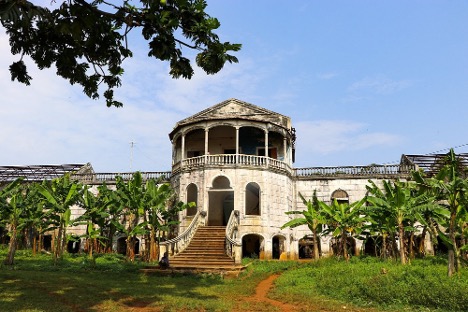
How to visit Roça Água-Izé
How to get there
Roça Água-Izé is on São Tomé’s east coast, in the Cantagalo district, approximately 45 minutes by car from São Tomé city via paved coastal roads. The roça sits inland slightly from the coastline. Drive carefully, the access road to the plantation itself is rougher than the main road.
When to go
Open daily, no admission fee. Mornings are best, the light is most flattering on the cathedral-like buildings, and you’ll have more interactions with residents who are out and about. The buildings face roughly east-west; sunrise light is particularly dramatic on the hospital façade.
What to bring
Camera, cash for an optional local guide (~€5-10), water, closed-toe shoes (uneven ground), and respect, residents live here. Photography is generally welcomed but always ask before photographing individuals or private spaces.
What to expect
This is not a polished tourist attraction, it’s a working community within historic architecture. Expect partial decay, occasional small museum sections, and the chance to interact with current residents. Local guides (often residents themselves) can be hired on arrival to provide cultural and historical context. The combination of architectural grandeur and ongoing community life makes Água-Izé one of São Tomé’s most thought-provoking visits.
Approach Água-Izé as a cultural and historical experience, not just a photo stop. Hire a local guide for €5-10, the stories of life on the roça (past and present) are what make the visit memorable. Be respectful: people live here, and the architecture’s beauty coexists with the painful colonial history that built it. Combine with Club Santana beach (south on the east coast) for a complete east-coast day.
Roça Água-Izé, questions answered
What is Roça Água-Izé?
Roça Água-Izé is a historic plantation on São Tomé’s east coast, in the Cantagalo district. In the early 20th century it was the most important cacao plantation in the world. Today it’s partially restored and partially in evocative decay, with hundreds of people still living in the original plantation housing, making it a unique living heritage site.
How do I get to Roça Água-Izé?
Roça Água-Izé is on São Tomé’s east coast in the Cantagalo district, about 45 minutes by car from São Tomé city via paved coastal roads. The access road to the plantation itself is rougher than the main road, drive carefully. There’s no admission fee; visits are self-guided or with local guides hired on arrival.
What can I see at Roça Água-Izé?
The most photographed feature is the former plantation hospital with its cathedral-like arched architecture. Other notable structures include workers’ housing (still inhabited), the administrative buildings, and the processing facilities. A small museum operates intermittently.
Is Roça Água-Izé worth visiting?
Yes, it’s one of São Tomé’s most substantive and thought-provoking heritage experiences. The combination of architectural grandeur, ongoing community life within the historic buildings, and the layered colonial history makes it different from any other site on the island.
How is Roça Água-Izé different from Roça Monte Café?
Roça Monte Café was a coffee plantation in the central mountains; Água-Izé was a cacao plantation on the east coast. Monte Café operates more like a polished heritage tourism site with tours and museum; Água-Izé is rawer, a working community within the historic structures.
Our recommended bases near Roça Água-Izé
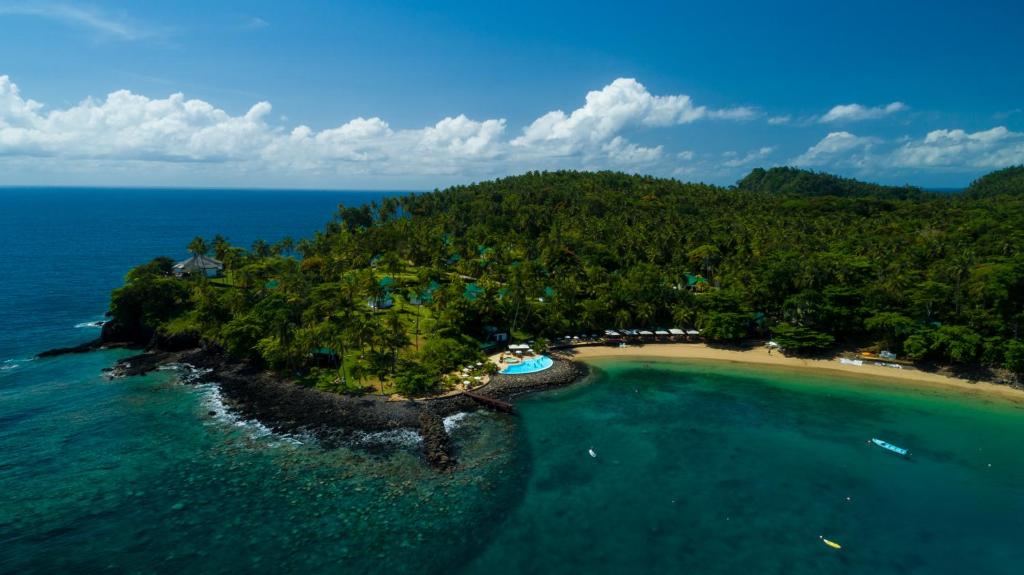
Club Santana
Beach resort east coast
Closest beach resort to Água-Izé, south of the plantation on the same east coast. Natural pair for a complete east-coast heritage and beach day.
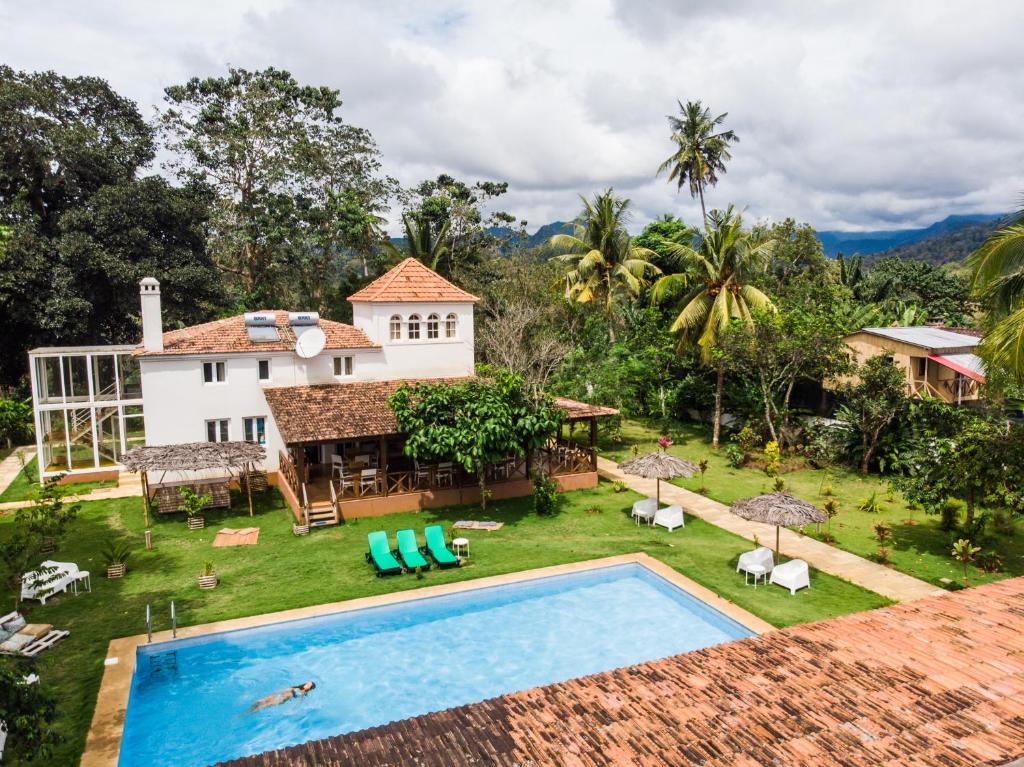
Roça Santo António Ecolodge
Rural heritage plantation
A sister roça heritage stay, useful for travelers wanting to deepen the heritage-plantation theme with overnight stay in another historic plantation setting.
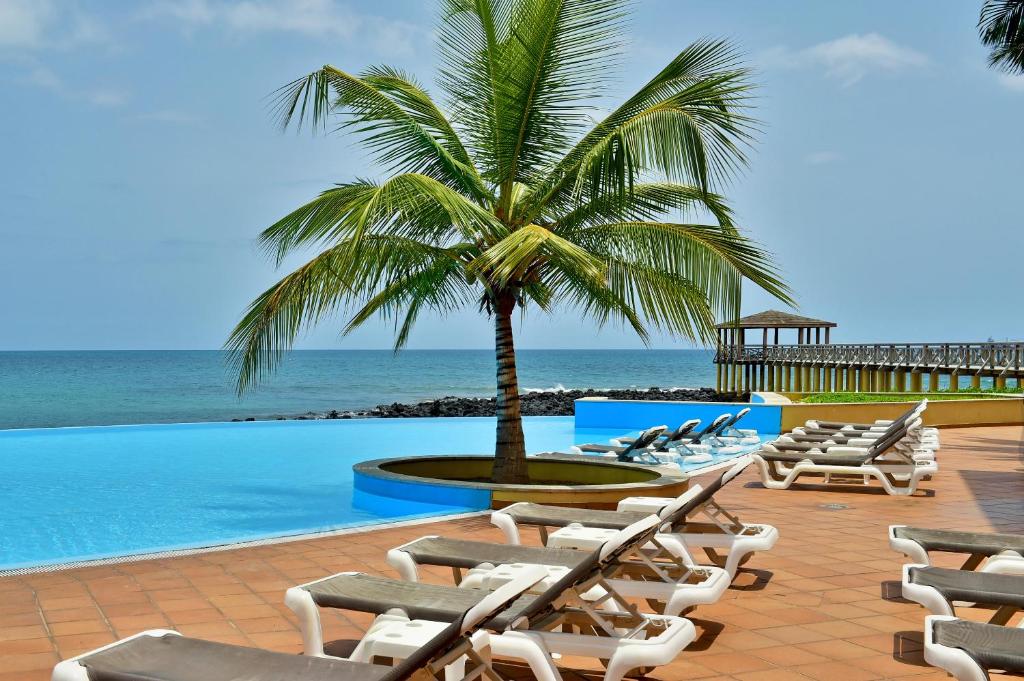
Pestana São Tomé
Flagship 5-star · Ana Chaves Bay
Flagship hotel for an east-coast day trip, comfortable city base with the day-tripping flexibility to combine Água-Izé with central São Tomé heritage.
Visiting Roça Água-Izé?
For more on Roça Água-Izé or local advice, we’re here to help.