
Pico Cão Grande
A needle of volcanic rock rising 370 metres straight out of the southern rainforest, the most recognisable landmark in São Tomé and Príncipe.
The peak that became the face of São Tomé.
If São Tomé has a single image, this is it: the shape on the postcards and stamps, the silhouette you picture before you arrive and remember long after you leave. Pico Cão Grande is also a genuine geological rarity, the solidified throat of a long-dead volcano left standing after the softer cone eroded away around it over millions of years. Nothing else on the island announces its wild, volcanic heart so completely.
It gives the country an identity out of all proportion to its size. For a nation of fewer than a quarter of a million people, few places on earth own a single natural symbol so completely, and travellers cross the world to stand in the forest beneath it.
What is Pico Cão Grande?
“A volcano turned inside out. The soft mountain washed away, and the hard core was left pointing at the sky.”
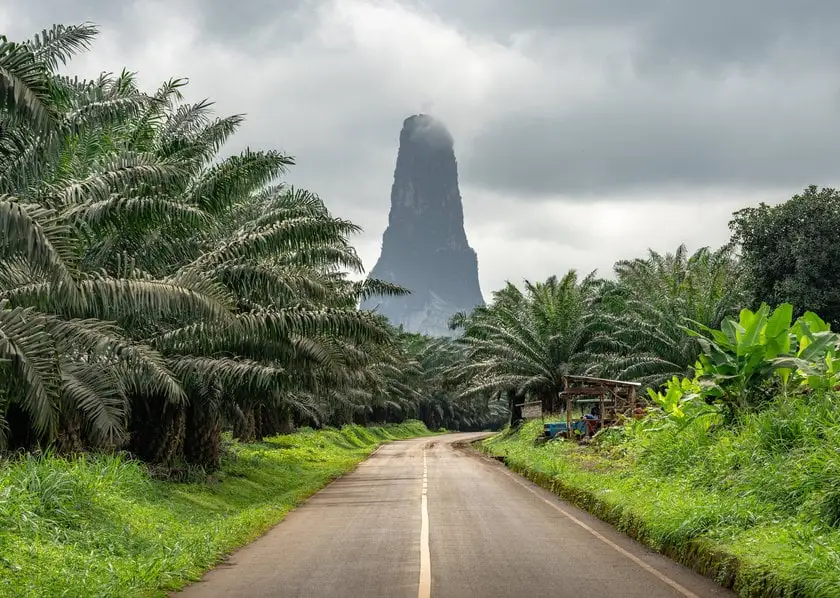
Pico Cão Grande, Portuguese for “Great Dog Peak,” is a needle-shaped phonolite volcanic plug that rises roughly 370 metres straight out of the southern rainforest, its summit 663 metres above the sea. It formed in the Pliocene, about 3.5 million years ago, as part of the Cameroon volcanic line, when magma hardened inside a volcanic vent and the surrounding rock slowly eroded away to leave the bare spire standing alone.
It sits inside Obô National Park in the Caué District, with a smaller companion spire, Cão Pequeno (“Little Dog”), nearby. It is not the island’s highest point, that is Pico de São Tomé (2,024 m) to the west, but it is by far the most famous.
The peak has drawn climbers for decades. A Portuguese team attempted it in the 1970s, but the first confirmed summit came in 1991, by a Japanese expedition. In 2016 climbers Gareth Leah and Sergio Almada spent four weeks bolting a 15-pitch route they named Nubivagant, “ascent into the clouds,” graded among the hardest in Africa. So steep and so often cloud-wrapped, the peak defeats almost everyone who tries. For the rest of us, it is admired from below.
Pico Cão Grande up close
How to see Pico Cão Grande
How to get there
Pico Cão Grande stands in the south of the island, in Caué District, near Vila Clotilde and about 9 km west of São João dos Angolares. From São Tomé city it is roughly a 1.5 to 2 hour drive down the southern coast road, an attraction in itself past fishing villages, plantations and rainforest. Go with a local driver or guide who knows exactly where the spire opens up between the trees.
When to go
The clearest views come in the dry gravana season (roughly June to September), and always early in the morning before the cloud builds. By midday the summit usually disappears into mist for the rest of the day, so start early and stay flexible.
What to expect
This is a sight, not a climb. The summit is a serious technical big-wall, first conquered in 1991 and climbed by only a handful of expert teams since, including the 2016 Nubivagant route. Ordinary visitors photograph it from the road and forest viewpoints, or take a guided rainforest walk toward its base.
What to bring
Sturdy shoes, a rain layer, drinking water and a camera. Trails near the base are wet, slippery and overgrown, so take a guide if you go beyond the roadside viewpoints.
Go at sunrise. By mid-morning the peak usually pulls a hood of cloud over itself and can vanish for the rest of the day, so the clean silhouette you have seen in photos is an early gift. And if it is socked in, the southern road still rewards you with waterfalls, forest and São João dos Angolares, so it is never a wasted drive. Pair the viewpoint with lunch at the roça for a full South Coast Day.
Pico Cão Grande: questions answered
How tall is Pico Cão Grande?
Its summit is 663 metres (2,175 ft) above sea level, and the bare tower rises about 370 metres (1,210 ft) above the surrounding rainforest floor.
Can you climb Pico Cão Grande?
Not as an ordinary visitor. It is a near-vertical phonolite tower, first summited in 1991, with only a handful of extreme technical routes since. People come to view and photograph it, not to climb it.
How was Pico Cão Grande formed?
It is a volcanic plug. Around 3.5 million years ago magma solidified inside a volcanic vent on the Cameroon volcanic line; over millions of years the softer surrounding rock eroded away, leaving the hard core standing as a needle.
Is Pico Cão Grande the highest peak in São Tomé?
No. The highest point is Pico de São Tomé at 2,024 metres, a separate mountain to the west. Pico Cão Grande is famous for its dramatic needle shape, not its height.
What does the name Pico Cão Grande mean?
It is Portuguese for “Great Dog Peak.” A smaller neighbouring spire is called Cão Pequeno, “Little Dog.”
Where is the best place to see it?
From the southern coast road and forest viewpoints in Caué District, between Vila Clotilde and São João dos Angolares, early in the morning before the cloud forms.
Is it worth visiting if I cannot climb it?
Yes. The drive down the south coast, the forest around the base and the sight of the needle breaking through the canopy are the experience. Most visitors photograph it from the road or take a short guided rainforest walk toward its foot.
Will I definitely see it?
Not guaranteed. The peak is often wrapped in cloud and mist. Dry-season mornings (June to September) give the best odds. Honest, but true.
Where to stay near Pico Cão Grande
Roça São João dos Angolares
São João dos Angolares · ~9 km
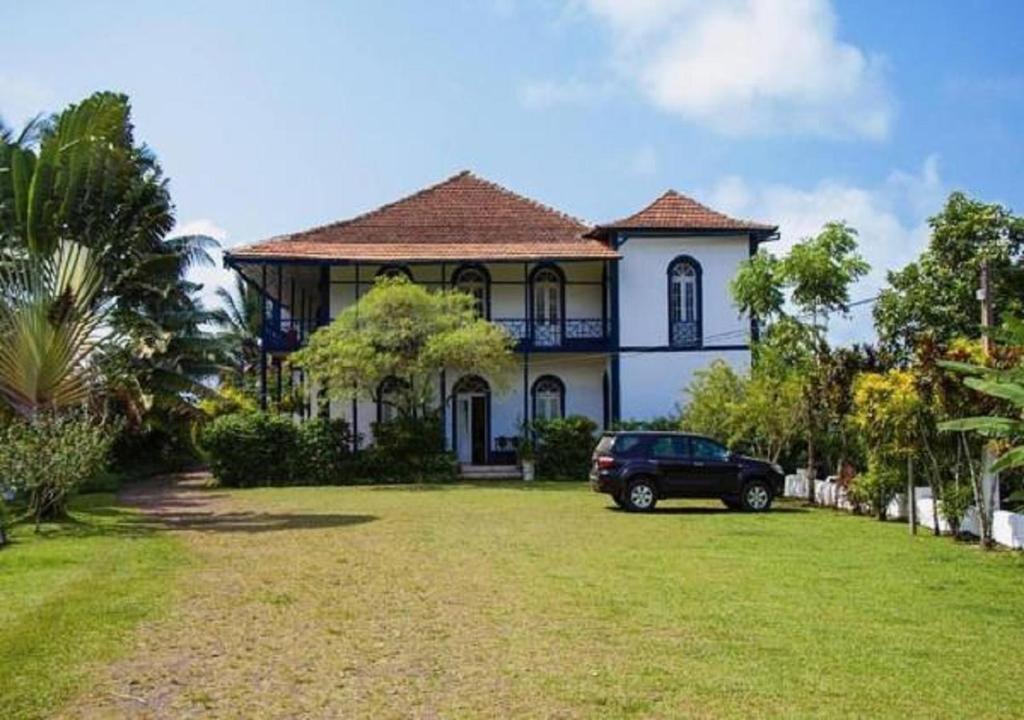
The nearest real base to the peak: a restored hilltop roça known for chef João Carlos Silva’s celebrated tasting menu.
Omali Lodge
São Tomé city · garden pool
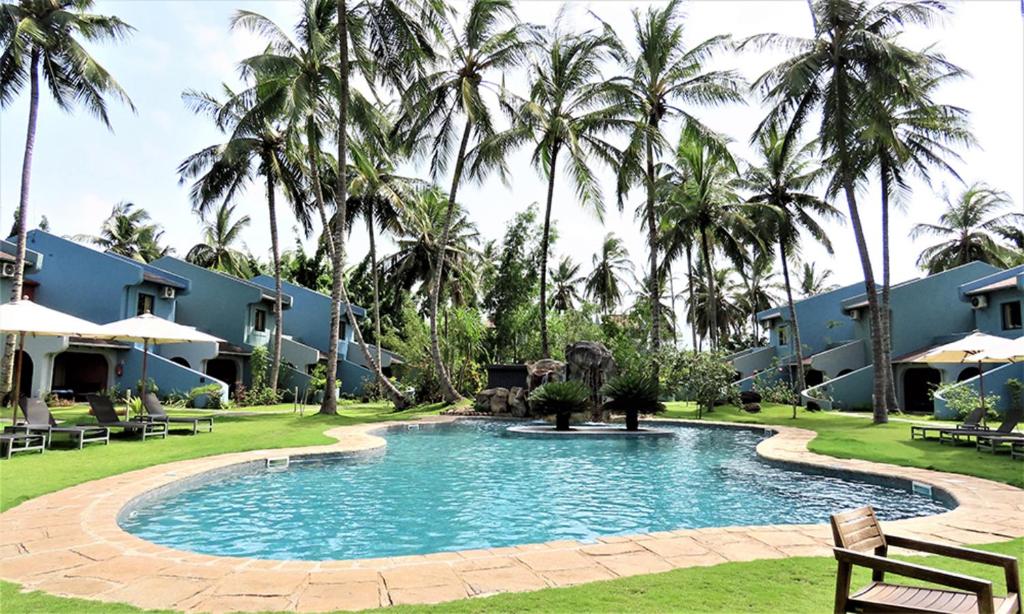
A relaxed boutique base in the capital, an easy launch point for the southern day trip.
Pestana São Tomé
São Tomé city · seafront
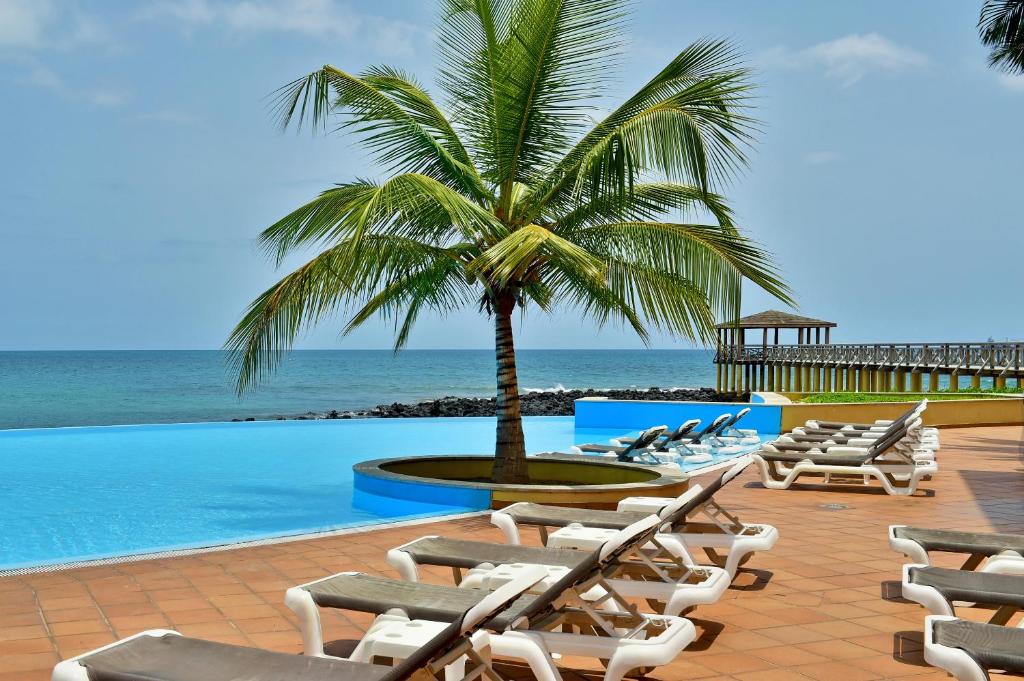
The capital’s full-service seafront hotel, convenient if you are touring the island by day.
There is nowhere to stay at the peak itself, base in the south or the capital and visit on a day trip.
Visiting Pico Cão Grande?
For more on Pico Cão Grande or local advice, we’re here to help.